
New Alipore has always had a certain reputation in Kolkata. Quiet streets, established families, and those spacious apartment blocks from earlier decades that you simply don’t see being built anymore. But over the last couple of years, something interesting has been happening here, the property market is slowly picking up pace again.
And in 2026, that shift is becoming hard to ignore.
A Market That’s Quietly Moving Up
If you look at the numbers, property prices in New Alipore have been climbing steadily. Not dramatically like some emerging suburbs, but consistently which, for many buyers and investors, is actually the better sign.
Right now, the average residential property price in New Alipore sits roughly between ₹9,000 and ₹14,000 per square foot, depending on the block, building age, and amenities. Premium projects or newly redeveloped properties can go even higher.
That’s a noticeable jump compared to prices just three or four years ago.
Older apartments, especially in blocks like Block A, Block C, and Block E still attract strong demand. Many of these units are large by modern standards, often 1,500 to 2,500 sq. ft., which is becoming increasingly rare in newer developments across Kolkata.
Why Buyers Still Prefer New Alipore
Part of New Alipore’s appeal is simple: location.
The neighborhood sits comfortably between South Kolkata’s major zones close enough to Tollygunge, Alipore, and Taratala without feeling overly crowded. Connectivity has improved too. With easier access to major roads and metro expansions nearby, commuting toward central business districts has become less of a hassle.
For families, the area checks many boxes: good schools, established markets, hospitals, and relatively calmer surroundings compared to newer high-density locations.
There’s also a certain prestige attached to a New Alipore address. It’s subtle, but people recognize it.
Redevelopment Is Changing the Landscape
Another reason prices are moving upward is redevelopment.
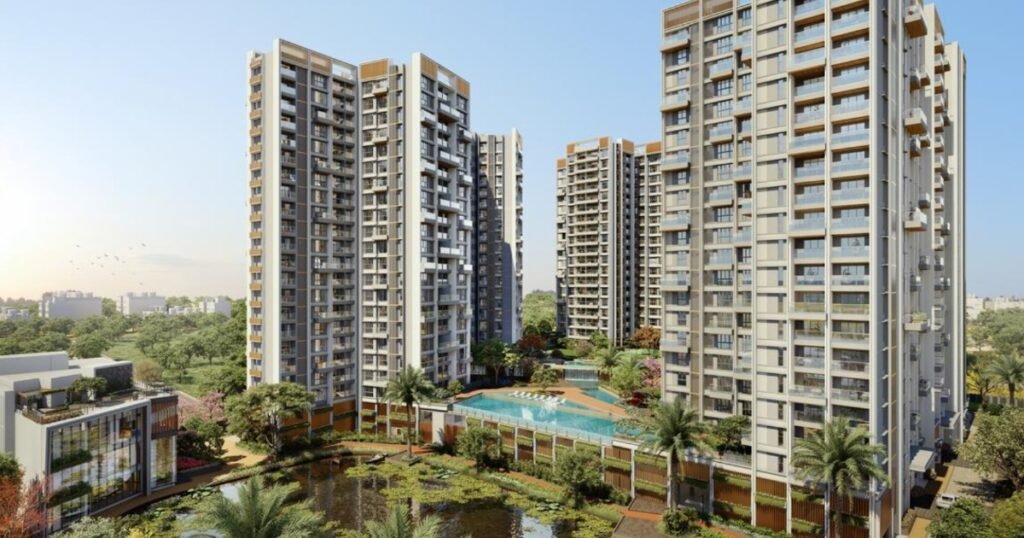
Many of the older residential buildings in New Alipore are now entering redevelopment phases. Developers are partnering with landowners to replace aging structures with modern apartment complexes.
The new projects typically offer elevators, parking, security systems, and updated amenities, things older buildings often lack.
But here’s the interesting part: redevelopment also means supply stays limited. Land parcels are scarce, and strict residential zoning keeps large-scale projects relatively controlled.
That scarcity tends to support price stability.
Demand From End-Users, Not Just Investors
Unlike some fast-growing suburbs where speculative buying drives prices, New Alipore’s market is still largely end-user driven.
Families upgrading from smaller apartments, NRIs looking for stable investments, and buyers relocating from nearby areas like Behala or Tollygunge are common in the buyer pool.
Investors are present too, of course. Rental demand in the area remains fairly strong, especially for spacious 3- and 4-BHK apartments.
Monthly rents for larger units can range between ₹35,000 and ₹80,000, depending on property condition and furnishing.
Is There Still Room for Growth?
That’s the big question.
Property experts generally see steady appreciation rather than sudden spikes in New Alipore. It’s a mature market with limited land supply, established infrastructure, and consistent demand, all signs of long-term stability.
If redevelopment continues and infrastructure projects around South Kolkata move forward as expected, prices could continue inching upward over the next few years.
Not explosive growth. But reliable.
And sometimes, in real estate, that’s exactly what serious buyers want.
New Alipore isn’t a “new hotspot” in the traditional sense. It’s something else entirely, an established neighborhood quietly evolving with time.
Prices are rising, redevelopment is refreshing older properties, and demand remains steady from families who value space, location, and reputation.
It may not be the loudest real estate story in Kolkata right now.
But if current trends continue, New Alipore could easily remain one of the city’s most dependable property markets through the rest of the decade.